Showing posts with label science. Show all posts

Sunday, March 28, 2010

Data!

I have data. We sent off one of my samples for sequencing and got the results back a couple of days ago. Now I need to start learning what to do with this type of data. It is really exciting to have this data because, while it is still very preliminary, it means that I have a springboard to start thinking about what might be going on in the environments that I am studying. It also means that our process of DNA extraction and amplification (from very difficult samples) worked, at least for this sample.

I like that scientific research comes in phases. First you have to plan out your experiments or your sample analyses. This often involves a lot of background research to figure out what other people have done to ask similar questions, and how they did it. Then you have to do the actual lab or field work. In the case of the lab work I have been doing, a lot of this feels like one step forward two steps backward because each time we figure one thing out in our procedure, there is another issue to deal with. We spend a lot of time trying to figure out why our extractions or DNA amplification isn't working, and deciding which of the 20 factors to tweak the next time around. If we get luck and pick the right one, things progress fast. If not, we can spend weeks or even months trying to navigate around some road block that is standing between us and the data we seek. Once samples have been collected, experiments have been carried out, experimental samples have been preserved or analyzed we are ready to proceed to the next phase... data analysis.

Once there is data in the picture the game changes. A new set of challenges arise because the goal in this phase is to figure out what the data are telling you. Sometimes this is frustrating because there is no clear story, and sometimes you realize you need to back up and get more data or slightly different data in order to really understand what is going on. In the world of genetic sequences that task becomes figuring out what hundreds of thousands of A's, C's, T's, and G's mean. There are databases to help you figure out what organisms are in your samples, but in environments like hydrothermal vents where so many of the microbes are uncultured and unknown these databases are of limited use. So now it falls to me to learn a new set of skills that involve computer savvy (using new programs and platforms), a thorough understanding of genetics, and I'm not sure what else. Bioinformatics... here I come!

After preliminary data typically comes more experiments and additional data collection. Eventually you decide you have enough data to tell a compelling story and then the next phase begins... writing. That one is a long way off, but it is the ultimate goal: to write up your results and get them published. In reality these phases often co-occur if you are working on various projects or various aspects of the same project. The way people do science very rarely occurs in the way that middle school science text books describe the "scientific method", but to me these phases represent different mindsets, and the transition from one to the next makes me feel like I have accomplished something.

I am excited because this data provides a peak into the next phase of my science... data analysis. It will be fun to not just be doing lab work for a while. It is intimidating and exciting to have a whole new set of skills (bioinformatics) to begin learning. This whole process has been one steep learning curve after another. It keeps you busy, and transition between phases prevents boredom.

Sunday, February 7, 2010

Molecular Biology Actually Works

Up until this past Friday I was semi-convinced that molecular biology doesn't really work. Or, at least, that it was never going to work for me. Since I transitioned into biology from the world of Geology and Environmental Science I have been playing catch up in terms of learning lab techniques, some of which are very finicky. I can now say that it is very exciting when these processes actually work.

We have been attempting to increase the volume of our extracted DNA using a Whole Genome Amplification (WGA) kit. In contrast to the more common PCR which amplifies a specific region of the DNA, the WGA process amplifies all of the DNA in a sample. This is great if you have very small amounts of DNA, but the downside is that if there is any non-sample DNA present that will amplify along with your sample.

My science partner and I spend about 2 weeks trying to work with our WGA kit. In order to make sure we were really amplifying our sample DNA and not a contaminant that we inadvertently introduced we used water as a negative control along side our sample. If we did things correctly we should have seen amplified DNA in our sample and no DNA in the water control when we were done. However, time after time we had more DNA in our water control than we did in the actual sample. This was very frustrating. We tried everything we could think of to be more sterile, and kept getting the same result. Finally we contacted the company and they sent us a new kit to work with. The first time we used it we got good results! There was no DNA in our water control, and plenty of DNA in the sample. It is really good to know the process works, and now we might actually be able to send some DNA out for sequencing. I am beginning to believe all the people who have told me that in molecular biology you do something over and over and over and over again... and then, finally, it works.

Wednesday, January 6, 2010

On class and race issues, and their relevance to my scientific career, or not.

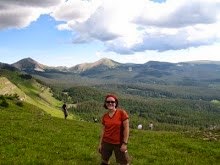
This image provides an appropriate setting for the daydream described below.


Warning: the following post contains ramblings and daydreaming. Please comment if anything needs clarification.

I just finished watching a 4 part PBS/BBC documentary called
America Beyond the Color Line, by Henry Louis Gates Jr. It brought me back to things I haven't thought about as much as I used to since my current graduate program. This film examines the state of black Americans 100 years after W.E.B. DuBois said that the problem of the 20th century would be "the problem of the color line". Gates travels through black America in this film (from Hollywood to wealthy black neighborhoods in Atlanta, to inner city Chicago housing projects and much more) and elegantly communicates a very complicated situation - race relations in America having come incredibly far since the beginning of the Civil Rights movement, but still having far to go. The film identifies a growing gap between inner city disadvantaged African Americans, and the growing African American middle class (and very wealthy) that have "made it". Much of the film asks questions about where to we go from here and how do we bridge this growing gap. There is no easy answer (obviously) and many interconnected approaches ranging from political changes, to localized mentoring and education programs, to a need for bigger dreams and belief that better is possible are all discussed.

So what does this all possibly have to do with me, a white graduate student studying deep sea microbiology? I am not totally sure, but the segments of this film that interviewed educators and high school age students resonated with me, and reminded me why I went into teaching rather than more grad school 3.5 years ago. It is easy to get sucked in to the world of research and academia and never look out. This is understandable given the amount of work and time required of a career as a professor or even life as a grad student.

I have worked with underprivileged students of various ages in a few different mentoring/inspiring/extra help/outdoor experiential ed programs, and it is something I love doing. I sometimes wonder whether I would have a bigger impact doing the science I am doing now (and whatever comes out of that) or through a career of teaching. I am honestly not sure I could hack it as an inner city teacher, and I sometimes feel guilty about that. I do know that I love working with kids, and really enjoy talking to them about how cool science is, and would like this to be part of what I do when I "grow up" (I like to live in a bit of denial-land where I am not yet an adult). I had so many wonderful opportunities growing up that inspired me to study science, and I would love to be able to provide similar experiences for youth who won't get them otherwise.

Back in October I wrote about a workshop I attended about how scientists communicate with The Public. One of the things that got brought up is how outreach-type activities are typically not valued in academia (at least not when it comes to hiring and/or tenure decisions) and that this is a reality that scientists like me (who think it is our responsibility to communicate not just with peer reviewed scholarly papers) have to deal with. Maybe I am cut out for academia and maybe I am not, but here is a day dream of a program that Future Me has started...

Located in the woods somewhere with water (maybe a lake or a river, but ideally a rocky sea shore) on a large tract of pristine land, but within a couple hours drive from a major metropolitan area (read - bad inner city school system) lies a campus that looks part farm, part school, part summer camp, and part laboratory. There is a ropes course, kayaks and/or canoes, camping equipment, cabins, and maybe a big fire ring. There are lab facilities with plenty of salt water tanks and touch tables housing a rotating selection of organisms and a good set of microscopes, and plenty of room to set up experiments. There is a garden that provides local organic produce and maybe even chickens for out kitchen and also provides educational opportunities. This is a property that I (or some very wealthy and dear friend) own and have built up. Hey, its my day dream so maybe I even built some of the buildings.

This campus is home to a variety of programs that have the following goals 1. bring urban youth into the wilderness, 2. get youth excited about science, 3. preach academic excellence, and 4. provide underprivileged kids with role models and connections that last a long time. I can many different types of programs occurring in this facility from a college semester or summer program to weekend or day trips for school groups. The coolest program offered is some type of collaboration with a program in the nearby city that targets a group of youth in elementary school and works with them through their college years on tutoring and mentoring and uses my facility for regular (annual? Monthly?) gatherings or mini-courses… who knows?

There are many programs that do things like this. Someone I know started a program of this type on his own that is particularly impressive. Some day I hope to go visit and learn how he pulled it off. I guess the point is that I am going to eventually want/need to be doing something other than pure science. This film reminded me of things that were definitely a priority at one point in my life that have become more of a passing interests/side project over the last few years.

In some ways it is all about your perspective. Being a geologist taught me to see things in very long time scales, time scales at which global catastrophic climate change might matter, but probably wont change Earth itself all that much. From this perspective, environmental issues are not about saving the planet, but about preserving our ability to live on it, and the environmental issues are the most pressing for humanity to tackle because all the social issues will be irrelevant if we are dead. ON the other hand that type of perspective can allow many of us (ie me) to ignore social issues that just seem too difficult to tackle.

I can’t help comparing two potential contributions that I could make to humanity: one being the creation of a wonderful program that is some fraction of what is described in the day dream above and the other being whatever cool scientific tidbits I might discover along the traditional track lying ahead of me in Academia. Depending on the perspective I look at these options with I can make arguments that either is somehow better. It is hard to know where I would have a greater impact (which is how I like to think of success). I remember as a child having very definitive opinions about just about anything (ask anyone who knew me before I was 18), but much of that certainty has vanished as I have seem a plethora of possible roads to travel (I have written about this before too). Maybe clarity will come, or maybe opportunities will arise, or not, and that will determine where life takes me.

Monday, November 23, 2009

Trying on my rose colored glasses

It has been brought to my attention that my last blog may have been a tad melodramatic. (What... me!) Just to clarify, my world is not coming to an end, and my thoughts of dropping out of grad school were mostly (I'd say 92.3%) in jest. I will chalk it up to my first real ride on the emotional roller coaster (please forgive the cliche, it really is a good image) that is, by all accounts, graduate school. I suppose I could institute a 24 hour waiting period before posting any emotionally charged blog post. But then, where is the fun in that?

In the spirit of Thanksgiving, I would like to end this brief post by stating how lucky I consider myself (for many reasons, but here referring to my student-ness). In a time when many are without jobs, or worried about security, my research has been deemed worthy of 6 years of support, and my responsibility is to learn as much as I can, and try to discover exciting new things. It really doesn't get much cooler than that!


Thursday, November 12, 2009

Science that looks like magic!


Image from: http://farm3.static.flickr.com/2013/1818381113_3ea6eeca57.jpg

I dont have much time tonight, because I have 8 papers to read for my 9:30am class. However, I had a good day and wanted to share part of it. Some folks in my lab and I are working on a project that involves trying to get DNA out of rocks that microbes are (presumably) living in. The rocks have been frozen, and the first step is to grind the rocks into a powder so that we can get at all the microbes that might be present within the rock's pores. The way we did this was very basic - mortar, pestle, and elbow grease. However, the key was not to let the rocks thaw out because we wanted to preserve the microbes as they were when the rocks were collected. In order to accomplish this we were pouring liquid nitrogen over the samples as we were crushing them in the stainless steel. Nitrogen is a gas at room temperature (~80% of what you breath in with each breath is dinitrogen, or N2). Nitrogen is a liquid at very cold temperatures, so when you put something in it, it freezes almost instantly. This makes it great for biology because you can freeze tissue samples before molecules start to react and change. LN2 (as liquid nitrogen is called) boils at -196 C (-321 F). When you pour it over something at room temperature it immediately starts to boil. I will bring my camera in next time I do this type of work (the above image is not mine, but gives the general idea) because it looked like a witches brew with nitrogen steam spilling over and down onto the floor as we worked. This is a similar (but more pronounced) effect to that created by dry ice (frozen N2). I really felt like I was in a Hogwarts potions class rather than a microbiology lab... awesome!

Tuesday, November 10, 2009

I just can't help myself, and I blame my mother

My mother is terrible at saying no. I admit that I used this to my advantage many times growing up (I don't manipulate her any more, I swear!). I don't really believe in karma, but if I did I would say that my similar inability to decline interesting opportunities or requests is what I deserve for all the times I didn't allowing her to say no to me.

I volunteered my lab for something this evening, and I don't regret it... yet. I went to a meeting tonight at the nearby museum of natural history to discuss ways to engage students on campus more with the museum. At this meeting I learned that they have a series of family programs on weekends where professors, post-docs, or lowly grad students give presentations based on their research to a family audience. I was not really interested in spending my time and energy to engage the undergrads in the museum, but the idea of presenting out work to kids and their parents... totally exciting! I think I have gauged the personality of my lab well enough to know that I will not be doing this on my own, but I also think it is something I can handle if no one else is interested. The challenge will be to bring in enough of what we are actually studying to supplement a basic talk about how cool hydrothermal vents and the deep sea are.

I can see the presentation starting off with an image depicting how much of the planet is covered with water, then talking about how most life that we think about gets its energy directly or indirectly from the sun, and then moving in to how different things are in the deep sea and contrasting the barren abyssal plains with hydrothermal vents. Enter here all sorts of cool preserved vent organisms that our lab has, and maybe even some vent sulfide (rocks that make up the chimneys) samples to pass around. From here I could go into some of the specifics of what our lab does, but the challenge will be to present microbial metabolism to middle schoolers in an engaging, but not too oversimplistic way. Maybe I can just do the basic microbes are awesome shpeel.

I am excited about this, especially because the museum administrator I was talking about it with said that he has a lot of trouble finding people to present. The problem is, this could become a huge time-suck, because I know how much time I can spend putting together an interesting slideshow. I think that this kind of communication and outreach is important, and under-valued in academia, but I also know that my priority needs to be my research, and that I have to guard my time. I don't think this will put me over the threshold, but I am realizing that I am going to have to start thinking before I volunteer for this type of thing. I did stop myself from volunteering at the aquarium last night when I realized that 4 hours per week plus travel time really was a bit much. I just want to do it all, which has always been my problem, like I said I blame my mom, who is only now at age beginning to guard her time to keep her sanity and prioritize things like gardening and weekend trips to Maine.

Saturday, October 31, 2009

Scientific Communication

I attended a day long workshop today with Cornelia Dean (science writer for the NYTimes). She has recently written a book called "Am I Making Myself Clear?". It is a guide for scientists about communicating with non-scientists. The book is an easy read and definitely kept my attention. The workshop was definitely a productive way to spend a Saturday!

It was really interesting to hear a group of 12 PhD students struggle to explain to a "normal person" what they study in one minute without using jargon. I actually consider myself pretty good at talking to non-scientists (I did teach middle school for three years after all), and I struggled to come up with a coherent message. The idea that this is something we should think about before hand and have ready had not occurred to me.

It is interesting to think about how universities typically do not encourage or reward scientists who make an effort to communicate with the public or participate in policy discussions. In fact scientists who do make this a priority are often looked down upon by their peers. I suppose this is because that type of communication is not advancing their research, and therefore represents time not spent on that research. It would seem to me that this represents a somewhat flawed values system within the scientific community. I agree that our priority needs to be research, but I think that for the good of the world communication of that research (other than in peer reviewed journals) to the general public needs to be a priority as well. I think this is especially true for scientists funded by taxpayer dollars. Our discoveries belong in the public domain, and the idea that they somehow trickle out of our scientific publications and into the "real world" is inaccurate. This workshop made me realize that it isn't the job of the media to do this communication for us.

When I think about some of the scientists I most admire (Ed Wilson, Jane Goodall, Rachel Carson being the first few who came to mind) I think less about their discoveries and focus more on the books they wrote for general audiences, as well as the activism they dedicate(d) themselves to. I think I admire them in large part because they are/were truly gifted communicators and their writings possess the ability to make people care. As I move forward in my research I look forward to finding ways to share my stories. I hope I have stories to share! Stay tuned...

Saturday, October 3, 2009

The Road Not Taken

2 of my students scout for tent sites in the Wind River Mountains, Wyoming. June, 2007


Being relatively new to blogging, I am taking my first stab and writing for a Blog Carnival. Here goes...


The Road Not Taken


While I am fairly, ok very, early on in my “career” (having just started graduate school) the idea of alternate paths is one that I have mulled over quite a lot in the last year. I often feel torn between science and wilderness. While these are obviously not mutually exclusive, and often (wonderfully) go hand in hand, for me science had meant less wilderness. Specifically, it has meant no more teaching in the wilderness... at least not for a while. I used to lead backpacking trips for students of various ages, and the idea of being a hands on experiential educator is one that I toyed around with for a long time. When I was a classroom teacher I was very involved with our school’s wilderness program, and had I continued down that path I might have had the opportunity to craft new ways for young men of Dallas to connect with the natural world. I think this is incredibly important given our increasing disconnect with Nature (PLEASE read "Last Child in the Woods" by Richard Louv) and as the climate and conservation issues become more and more profound.


I remember as a NOLS (National Outdoor Leadership School) leading my group of 10 16-18 year olds down a steep rocky slope in the Wind River Mountains after an arduous 12 day of day of traversing a 3 mile (yes, 3 miles in 12 hours = immense frustration) scree slope full of house-sized boulders. We were rushing to beat a building storm. Our group got into camp and set up tents just in time for us to tell our students to get out of their tents and assume lightning position in the rain and hail (to avoid proximity to metal poles). Then, as hypothermia became a greater risk than the lightening (roughly 30 minutes later) telling our students to get back in the tents. It was a very difficult day physically, and emotionally. Clearly, my memories of wilderness education are not all wonderful, but after spending a month taking care of themselves and each other in the wilderness those students were more confident, more capable, better leaders, and were certainly Wilderness advocates for life. I learned more about myself, and my leadership style working for that organization group than i will in any other job... I’m certain. The flip side is that I was not doing science, and I missed it.


I decided to leave both classroom teaching (middle school life and earth/space science and high school marine science) and wilderness education behind when I applied to graduate school. I loved teaching about science, and especially talking about what scientists that I knew were up to, but I really missed actually doing science. The classroom teaching had allowed me the schedule to do wilderness based experiential education in the summers, but I am fairly certain graduate school will not.


There are things I already miss... now that I am a whopping 2 months in. Primarily I miss my my colleagues and students. I miss coaching, and watching skills and confidence grow outside of the classroom. I miss my former students running into my room to say hi (or possibly trying to disrupt my classes). I miss having a wonderful group of educators around to collaborate or commiserate with. I miss the fun and silliness that comes with middle school. I miss my after school climbing club.


However, I am somewhere that is almost overwhelming in its vibrancy. The almost tangible swirling energy and idea make it an incredibly exciting and energizing place to be. I had missed doing research while I was teaching, and now I am picking projects and taking classes, and learning a huge amount. Getting paid to learn is quite the luxury, and I consider myself very lucky for the opportunity! I don’t know where exactly the PhD route will take me, but I know that I will always be an educator of some sort. In some foggy crystal ball vision I can almost see the path not taken and the chosen route converging down the line a ways where I create a wilderness-based science school in some beautiful location, maybe overlooking the sea on the Maine coast.